Montana Green Juniper
Juniperus scopulorum 'Montana Green'

Height: 15 feet
Spread: 6 feet
Sunlight:

Hardiness Zone: 3b
Other Names: Colorado Redcedar
Description:
A dense, narrowly columnar or pyramidal evergreen for those tough locations, with rich deep green foliage all season long and a fine texture; use anywhere in the garden or yard for its definitive shape and beautiful color, makes a fine tall hedge
Ornamental Features
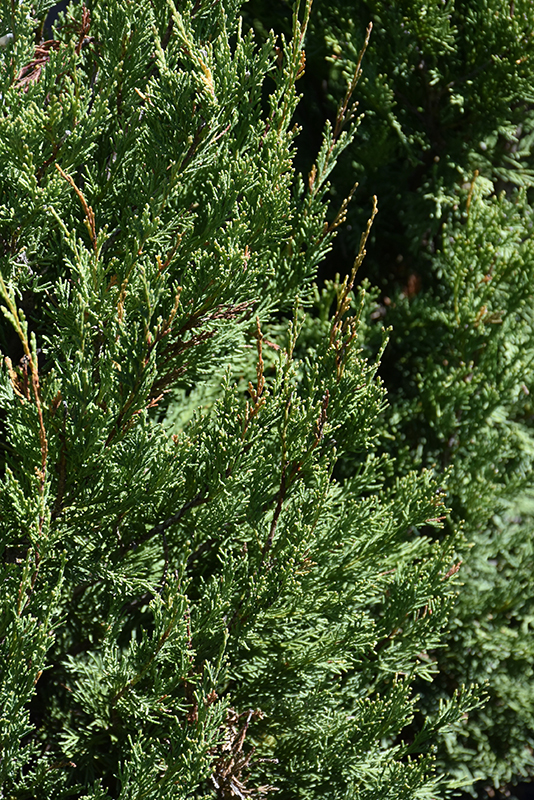
Montana Green Juniper is a dwarf conifer which is primarily valued in the landscape for its rigidly columnar form. It has forest green evergreen foliage. The scale-like sprays of foliage remain forest green throughout the winter.
Landscape Attributes
Montana Green Juniper is a dense multi-stemmed evergreen shrub with a narrowly upright and columnar growth habit. It lends an extremely fine and delicate texture to the landscape composition which can make it a great accent feature on this basis alone.
This is a relatively low maintenance shrub, and is best pruned in late winter once the threat of extreme cold has passed. Deer don't particularly care for this plant and will usually leave it alone in favor of tastier treats. Gardeners should be aware of the following characteristic(s) that may warrant special consideration;
- Disease
Montana Green Juniper is recommended for the following landscape applications;
- Accent
- Vertical Accent
- Hedges/Screening
- General Garden Use
Planting & Growing
Montana Green Juniper will grow to be about 15 feet tall at maturity, with a spread of 6 feet. It tends to fill out right to the ground and therefore doesn't necessarily require facer plants in front, and is suitable for planting under power lines. It grows at a slow rate, and under ideal conditions can be expected to live for 60 years or more.
This shrub should only be grown in full sunlight. It is very adaptable to both dry and moist growing conditions, but will not tolerate any standing water. It is considered to be drought-tolerant, and thus makes an ideal choice for xeriscaping or the moisture-conserving landscape. It is not particular as to soil type or pH. It is somewhat tolerant of urban pollution. This is a selection of a native North American species.